
Denver real estate is booming — and knowing how to navigate it could save you tens of thousands of dollars. Whether you’re buying, selling, or investing, this guide covers everything you need.
Why Denver Real Estate Stands Out
Denver real estate consistently ranks among the strongest housing markets in the country — and it’s not hard to see why.
The city offers more than 300 days of sunshine, instant access to world-class skiing and hiking, a young and educated workforce, and an economy that has diversified far beyond its energy-sector roots.
Major employers like Lockheed Martin, Charles Schwab, and Centura Health anchor the job market. A fast-growing tech and startup corridor along the Front Range adds even more fuel to housing demand.
The result? People move here and they stay — which keeps demand for Denver real estate consistently high.
Denver Real Estate Market Trends 2026

The median price for Denver real estate currently sits in the mid-to-high $500,000s. Here’s a quick breakdown by property type:
- Single-family homes in premium neighborhoods: $800K–$1M+
- Condos and townhomes: $350K–$450K
- Suburban Denver metro (Arvada, Lakewood, Aurora): $380K–$520K
Inventory Remains Tight
Supply in the Denver real estate market is still well below historical norms. Well-priced homes move fast — often within days. Buyers who are pre-approved and prepared will always have an edge.
The “Lock-In Effect” Is Real
Many homeowners who locked in sub-3% mortgage rates in 2020–2021 aren’t moving. This suppresses resale inventory, which means new listings are precious. Acting quickly when the right property appears is essential.
Mortgage Rates Have Moderated
Rates have come down from their 2023 peaks. Buyers today should explore rate buydowns, seller concessions, and assumable mortgages — strategies a skilled Denver real estate broker can help identify.
Best Denver Neighborhoods to Buy In
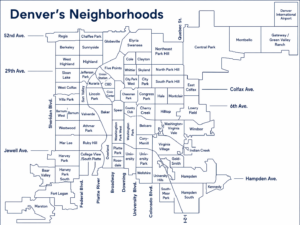
Denver is a city of distinct neighborhoods. Each offers a different lifestyle, price point, and investment profile.
Washington Park
Tree-lined streets, Victorian and Craftsman homes, and 165 acres of green space. Premium prices, premium lifestyle. Consistently one of the most-searched areas in Denver real estate.
Highland (LoHi)
Urban energy meets neighborhood charm. Renovated Victorians sit alongside sleek new townhomes. Denver’s best restaurant scene is right outside your door.
Congress Park / Cheesman Park
Architecturally rich homes at more accessible prices than Wash Park. Strong walkability and a tight-knit community vibe.
Central Park (formerly Stapleton)
Master-planned, family-friendly, and full of newer construction. Excellent schools and community amenities make this a top choice for buyers relocating to Denver.
RiNo (River North Arts District)
Lofts, converted warehouses, food halls, and galleries. High energy, high upside. A smart play for investors watching long-term Denver real estate appreciation.
Green Valley Ranch / Montbello
Affordable ownership within Denver city limits. Single-family homes below the city median. An underrated area worth watching closely.
How to Buy a Home in Denver

Buying Denver real estate in 2026 rewards preparation. Here’s how the process works:
Step 1: Get Pre-Approved Before You Browse
Pre-approval is non-negotiable in this market. Sellers won’t consider offers without it, and you need a real budget before you start touring.
Step 2: Partner With a Denver Real Estate Broker
This is your most important decision. A great Denver real estate broker advises on pricing, spots red flags in disclosures, negotiates hard on your behalf, and guides you through a complex contract process. Interview at least two or three before choosing.
Step 3: Know Your Must-Haves vs. Nice-to-Haves
Character home vs. new construction? Walkability vs. square footage? Urban neighborhood vs. suburban schools? Denver offers real options — but real tradeoffs too.
Step 4: Write a Strong, Clean Offer
Price matters, but so do terms. Earnest money, inspection timelines, escalation clauses, and closing flexibility can all be the difference between winning and losing.
Step 5: Do Your Due Diligence
Colorado is a disclosure-friendly state, but always do your own inspection. A thorough home inspection, sewer scope, and HOA document review are essential steps before removing contingencies.
Step 6: Close and Get the Keys
Colorado closings happen through a title company. The process typically takes 20–45 days from accepted offer to keys in hand — a smooth timeline for buyers who stay organized.
How to Sell Your Denver Home for Top Dollar
Sellers still hold leverage in Denver real estate — but only if they execute well.

Price It Right From Day One
Overpriced homes sit. In a market where buyers are watching new listings closely, a price cut signals weakness. Start with a data-driven comparative market analysis (CMA) from your broker.
Presentation Wins
Professional photography is mandatory. Buyers start their search online, and your listing photos are your first impression. Add light staging, fresh paint, and curb appeal touch-ups for maximum impact.
Market Proactively
The best Denver real estate agents don’t just post to the MLS and wait. They market on social media, reach out to buyer networks, run targeted email campaigns, and host compelling open houses.
Know Your Net Before You List
Seller costs in Colorado include commissions, title insurance, prorated taxes, and transfer fees. Ask your broker for a net proceeds estimate upfront — no surprises at the closing table.
Denver Real Estate Investment Opportunities
Denver continues to attract serious real estate investors for good reason.

Long-term rentals perform well near light rail lines, universities (DU, CU Denver), and major employment corridors. Vacancy rates remain well below national averages. According to Zillow’s rental market research, Denver consistently ranks as a top-tier rental market.
House hacking is gaining popularity thanks to Denver’s expanded ADU (Accessory Dwelling Unit) allowances. Buy a property with an ADU or multi-unit potential, live in one unit, and let rent offset your mortgage.
Fix-and-flip margins have tightened as renovation costs have risen, but opportunities still exist in emerging neighborhoods for experienced investors with the right team.
Short-term rentals require licensing in Denver. The city restricts non-primary-residence STRs in most zones. Always verify regulations before purchasing with Airbnb income in mind. Check the City of Denver’s official STR regulations before investing.
Relocating to Denver? Read This First
Denver is a top relocation destination from California, Texas, the Midwest, and the coasts. A few things to know before your move:
Taxes: Colorado has a flat 4.4% state income tax — lower than California, higher than Texas. Property taxes in Denver are relatively low compared to most major metros.
Altitude: Denver sits at 5,280 feet. Temporary altitude sickness is common for newcomers. Most people adjust within a few weeks. Stay hydrated.
Traffic: Denver’s road network hasn’t kept pace with population growth. Where you work relative to where you live is a real quality-of-life factor. Light rail access can make a meaningful difference.
Culture: Denver has a famously laid-back, outdoor-oriented culture. Locals prioritize lifestyle — and that spirit is woven into everything from the restaurant scene to the work environment.
Schools: School quality varies significantly by neighborhood. Research the Denver Public Schools zone for any home you’re seriously considering.
How to Choose a Denver Real Estate Broker

Hundreds of licensed agents work in the Denver metro. Here’s how to find the right one:
Demand local expertise. Denver’s neighborhoods vary dramatically. An agent who specializes in your target area will have insights a generalist simply can’t offer.
Check their track record. Recent transactions, days-on-market stats, and client reviews on Google or Zillow paint a clear picture.
Ask about their network. Great Denver real estate brokers have trusted relationships with lenders, inspectors, title companies, and other agents — relationships that give clients a real edge.
Prioritize communication. Denver real estate moves fast. A slow-responding agent can cost you a deal. Ask upfront how they communicate and how quickly they respond.
Discuss fees openly. Commissions are negotiable and have evolved following recent industry changes. Have a frank conversation before signing any agreement.
Frequently Asked Questions
Is Denver real estate a good investment right now? Yes — for buyers who are financially prepared and have realistic expectations. Waiting for a dramatic price drop has been a losing strategy in this market for many years.
What is the average home price in Denver? The median price for Denver real estate is currently in the mid-to-high $500,000s, though it varies significantly by neighborhood and property type.
How do I find a reliable Denver real estate broker? Ask for personal referrals, read reviews on Google and interview at least two or three agents. Look for local expertise, strong communication, and a proven track record.
What are the best neighborhoods in Denver for families? Central Park, Washington Park, and Hilltop are consistently top-ranked for families. Each offers quality schools, green space, and strong community character.
What’s the difference between a real estate agent and a broker in Denver? A broker holds a higher-level license than a standard agent and can operate independently or run their own firm. Many top Denver real estate professionals hold broker licenses — it’s worth asking.
Ready to Make Your Move in Denver Real Estate?
Denver real estate rewards the prepared and the decisive. Whether you’re buying your first home, listing a property you’ve loved for years, or building an investment portfolio along the Front Range — having the right team changes everything.
Our Denver real estate brokers bring deep neighborhood knowledge, data-driven strategy, and genuine commitment to your goals.
Schedule your free consultation today — and let’s make your next Denver real estate move your best one.
Sources: Zillow Research | City of Denver Official Site | Denver Public Schools