
Living in the Denver Suburbs
One of the most common conversations I have with buyers relocating to the Denver metro area goes something like this: they want to be “near Denver” but are not quite sure what that means, or whether they actually need to live in the city itself.
The honest answer is that the Denver suburbs are genuinely exceptional. In many cases, they offer a better lifestyle than the city for buyers who want more space, quieter streets, and a stronger sense of neighborhood community without sacrificing access to everything Denver has to offer.
But the suburbs are not all the same. Each one has its own personality, price point, commute profile, and lifestyle character. What works perfectly for one buyer is completely wrong for another.
Here is my honest, locally informed guide to the most popular Denver suburbs in 2026.
Arvada: Historic Charm with Modern Energy
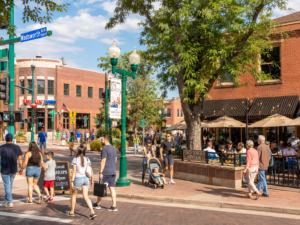
Arvada sits about seven miles northwest of downtown Denver and has undergone a remarkable transformation over the past 15 years. What was once a quiet bedroom community is now one of the most sought-after suburbs in the metro, anchored by the thriving Olde Town Arvada Historic District.
Olde Town is genuinely special. Sections of Olde Wadsworth Boulevard and Grandview Avenue have been closed to car traffic, creating a pedestrian-friendly environment lined with locally owned restaurants, boutiques, art galleries, and entertainment venues. The Arvada Center for the Arts and Humanities is one of the best community arts venues in Colorado. Weekly farmers markets and year-round events make Olde Town a genuine gathering place rather than just a shopping district.
The G Line commuter rail connects Arvada directly to Union Station in downtown Denver, making it one of the best-connected suburbs for commuters who want to avoid driving. The League of American Bicyclists has also recognized Arvada as a Bicycle Friendly Community, with an approximately seven-mile bike loop connecting parks and neighborhoods.
The median sale price in Arvada is around $642,000, reflecting its popularity and continued appreciation. Buyers will find a mix of midcentury ranch homes in established neighborhoods, newer construction in developments like Candelas and Leyden Rock to the west, and renovated Victorian properties near Olde Town.
If you want walkable neighborhood energy, easy access to both Denver and Boulder, and a community that has genuinely come into its own, Arvada belongs at the top of your list.
Littleton: Small Town Feel, Big Outdoor Access
Littleton sits about ten miles south of downtown Denver along the South Platte River and consistently ranks among the most livable suburbs in the metro. Its historic downtown on Main Street is one of the most charming in Colorado, lined with locally owned restaurants, boutiques, and community gathering spaces that give Littleton a genuinely small-town feel despite being firmly within the metro area.
Outdoor access is exceptional. Littleton borders Chatfield State Park, one of the most popular recreation areas along the Front Range, offering boating, camping, hiking, and wildlife viewing within minutes of residential neighborhoods. The High Line Canal Trail, which stretches a remarkable 71 miles in total, passes through Littleton and connects to a broader network of regional trails.
With over 1,400 acres of parks and open space, Littleton attracts buyers who want nature close at hand without sacrificing urban convenience. The suburb is served by RTD light rail, providing a car-free connection to downtown Denver when needed.
Median home prices in Littleton sit around $550,000, with meaningful variation between the historic Victorian properties near downtown, newer developments further south, and the more luxury-oriented communities like Polo Reserve and Columbine Country Club.
Aurora: Diversity, Affordability, and Room to Grow
Aurora is the largest of the Denver suburbs with over 300,000 residents, and it is one of the most diverse communities in Colorado. That diversity is reflected in a restaurant scene, cultural offerings, and community character that stands apart from most other suburbs in the metro.
For buyers who have found Denver’s price points challenging, Aurora offers meaningful affordability relative to the city. Home prices range widely given Aurora’s vast geographic footprint, but entry-level single-family homes are more accessible here than in most of the western suburbs.
Southern Aurora in particular has attracted significant attention from buyers seeking newer construction, strong schools, and easy access to both the Denver Tech Center and Denver International Airport. The Southlands Mall area has created a walkable retail and dining hub that gives southern Aurora a genuine community anchor.
The High Line Canal Trail runs through Aurora, providing miles of walking and cycling access. The city operates five municipal golf courses, and the natural areas along the eastern edge of the metro offer a different but genuinely beautiful version of Colorado’s landscape.
For buyers prioritizing value, diversity, and space, Aurora consistently delivers.
Westminster: Between Denver and Boulder
Westminster is one of the most strategically located suburbs in the metro, sitting about nine miles northwest of downtown Denver and approximately 20 miles from Boulder. For buyers who need or want access to both cities, Westminster hits a sweet spot that very few communities can match.
The suburb has invested heavily in parks and recreation infrastructure, with 60 parks and over 3,000 acres of open space spread throughout the community. The city’s water park and ice center provide year-round family activity anchors that many suburbs cannot match.
Housing stock in Westminster is genuinely diverse, ranging from 1970s ranch homes in established neighborhoods to contemporary construction in newer developments. Price points reflect that diversity, spanning from approximately $400,000 to over $1 million depending on location and condition.
Westminster is also one of the more commuter-friendly suburbs for people who work along the U.S. 36 corridor, which connects to Boulder and hosts a significant concentration of technology and professional services employers.
Centennial: Safety, Accessibility, and the Denver Tech Center
Centennial consistently ranks as one of the safest cities in the nation and is a top choice for buyers who prioritize security, strong schools, and convenient access to the Denver Tech Center employment corridor.
The suburb sits southeast of Denver and benefits from excellent light rail connections that run along the I-25 corridor. Residents can reach downtown Denver, the Tech Center, and Denver International Airport with relative ease, making Centennial a practical choice for professionals who work along the southeast corridor.
Parks, recreation centers, and community events give Centennial a strong sense of neighborhood identity that belies its suburban character. Fiddler’s Green Amphitheatre, one of the metro area’s premier outdoor concert venues, sits within Centennial and gives residents access to a world-class entertainment experience close to home.
For buyers who want suburban comfort with genuine urban accessibility and a community that takes safety seriously, Centennial is hard to beat.
Golden: Mountain Town Feel, Metro Convenience
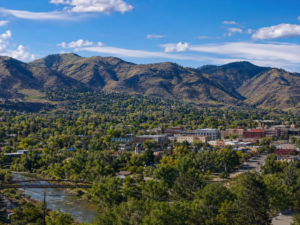
Golden occupies a genuinely unique position among the Denver suburbs. Nestled at the base of the foothills about 20 minutes west of downtown, Golden feels more like a mountain town than a suburb, and that distinction attracts a very specific kind of buyer who values outdoor access above almost everything else.
Hiking, mountain biking, and rock climbing are accessible directly from Golden’s neighborhoods in a way that no other suburb can match. Clear Creek runs through downtown, providing tubing and kayaking within the city itself. Lookout Mountain and North Table Mountain offer dramatic trails with views of the entire Front Range. The proximity to ski resorts via I-70 is the best of any Denver suburb.
The Colorado School of Mines shapes Golden’s community character in meaningful ways, bringing an intellectual, technically-minded population and a genuine college-town energy to the downtown area.
Median home values in Golden approach $700,000, reflecting the premium that buyers are willing to pay for its unique combination of mountain access and metro convenience. Buyers will find historic homes in the walkable downtown area, newer construction on the benches above town, and larger properties in communities like Genesee and Lookout Mountain.
If the mountains are genuinely central to why you are moving to Colorado, Golden deserves serious consideration.
Lakewood: Denver’s Western Gateway
Lakewood sits immediately west of Denver, separated from the city by little more than a highway. Its vast north-to-south footprint encompasses dramatically different neighborhoods, from urban-feeling areas near Edgewater and Wheat Ridge to quieter residential communities near Bear Creek Lake Park in the south.
The Belmar shopping district has given Lakewood a genuine mixed-use urban hub, with retail, dining, and entertainment concentrated in a walkable format that many suburban shopping areas lack. Bear Creek Lake Park provides outstanding water recreation and trail access within the city.
Lakewood offers access to Jefferson County schools and sits along the W Line light rail connecting to downtown Denver and Lakewood’s own Garrison and Wadsworth stations. Larger lot sizes than you would find in Denver proper, combined with a range of home prices, make Lakewood attractive to buyers coming from a variety of budgets and lifestyle preferences. Lakewood has been our company’s home since 1982!
Highlands Ranch: Master-Planned Living at Its Best
Highlands Ranch is one of the most popular relocation destinations in the entire Denver metro, and its appeal is easy to understand. As a master-planned community developed by Mission Viejo Company, Highlands Ranch was designed from the ground up with amenities, infrastructure, and community spaces that few organically developed suburbs can match.
Four state-of-the-art recreation centers provide residents with fitness facilities, pools, courts, and programming that would cost a fortune to replicate on a private basis. An extensive trail network connects neighborhoods to open space preserves and community parks. The overall aesthetic is cohesive and well-maintained in a way that gives Highlands Ranch strong and consistent curb appeal throughout.
Douglas County schools serve Highlands Ranch and are consistently among the highest-rated in the state. For buyers relocating from other parts of the country, the combination of excellent schools, top-tier amenities, and master-planned organization makes Highlands Ranch feel immediately familiar and accessible.
Homes range from more affordable townhomes and paired patio homes to large single-family properties in gated communities, accommodating a wide range of budgets while maintaining the community’s overall character.
Broomfield: The Tech Corridor Sweet Spot
Broomfield sits at the intersection of Denver and Boulder, both geographically and professionally. Major technology employers including Oracle and Level 3 Communications have significant presences here, and the broader U.S. 36 tech corridor that runs between Broomfield and Boulder hosts one of the highest concentrations of technology employment in Colorado.
For buyers who work in the tech industry or for companies along the U.S. 36 corridor, Broomfield’s location dramatically reduces commute times while maintaining easy access to both Denver and Boulder‘s amenities.
An extensive trail system connecting Stearns Lake and Josh’s Pond gives Broomfield genuine outdoor recreation anchors. The suburb has grown significantly over the past two decades and continues to see new development across residential and commercial uses.
How to Choose the Right Denver Suburb for You
With so many strong options, how do you narrow it down? Here is the framework I share with every buyer who asks this question:
Start with your commute. Where do you work, and how do you want to get there? The difference between a suburb on the right side of town for your commute and the wrong side can be 30 to 45 minutes each way. Test your commute at rush hour before deciding.
Think about what you will actually do on weekends. If you will be skiing every winter weekend, Golden and the western suburbs put you on I-70 faster than anywhere else. If you want trail running and cycling, Littleton and Arvada have exceptional access. If you want urban energy, the closer-in suburbs like Lakewood and Englewood keep you near Denver’s core.
Be honest about your price range. The suburbs vary significantly in price. Golden and Highlands Ranch tend to run higher. Aurora and Westminster tend to offer more value. Knowing your budget helps eliminate options quickly and focuses your search productively.
Consider what stage of life you are in. A buyer who wants to walk to dinner and live in a walkable neighborhood will love Olde Town Arvada or downtown Littleton. A buyer who wants space, quiet, and strong schools will love Centennial or Highlands Ranch. Neither is right or wrong, they are just different.
At Legacy 100 Real Estate Partners, we work across the entire Denver metro and know each of these communities in depth. Whether you are drawn to the mountain feel of Golden, the historic charm of Littleton, or the master-planned amenities of Highlands Ranch, we can help you find the right fit.
Ready to explore Denver suburbs in person? Contact our team and we will put together a custom suburb tour based on your priorities ->
Read our Denver neighborhood guide for in-city options ->) Moving to the Denver area? Read our complete relocation guide ->) Ready to buy? Read our first-time buyer guide ->)
Sources and additional reading: