
Does Your House Smell?
I have walked through thousands of homes over the course of my career. I have seen outdated kitchens, low ceilings, bad carpet, awkward layouts, and every variety of deferred maintenance imaginable. All of those things affect a buyer’s perception. Most of them can be negotiated around.
Smell cannot.
Buyers decide within thirty seconds of walking through a front door whether they want to be in a home. They may not even consciously register what made them feel that way. But smell is processed faster than any other sense and it triggers an emotional response that no amount of beautiful staging can override once it has been activated.
I tell my sellers this directly. Not every broker does, because it is an uncomfortable conversation to have with someone who loves their home and their pets and their lifestyle. But having it before you list is the difference between a smooth sale and a price reduction you did not see coming.
Here is everything you need to know.
The Smells That Kill Home Sales
Let me be specific, because vague warnings about “odors” are not useful to anyone.
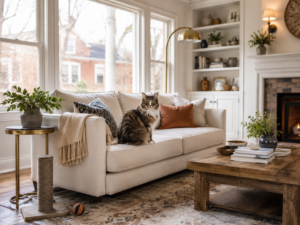
Cats. I say this with love for cat owners everywhere, but if you have a cat, your home almost certainly smells like one somewhere, like where the littler box is. This is not a judgment. It is a biological reality. Cats produce a compound called felinine that humans can detect at very low concentrations, and it gets into carpet, upholstery, walls, and HVAC systems in ways that are not visible and not removed by regular cleaning.
And if a cat has urinated anywhere on the floor like on carpet, hardwood, or subfloor we have a serious problem. Cat urine contains uric acid that bonds to surfaces and cannot be eliminated with standard cleaning products. It can be reactivated by humidity and will reassert itself even after a property has been cleaned and deodorized. Buyers with any sensitivity at all will smell it immediately and the association is extremely difficult to overcome.
Dogs. Dog smell is more familiar to most buyers and slightly more forgivable, but it is still a real factor. Dog beds, dog blankets, dog crates, the area around feeding bowls, and anywhere a dog regularly sits or sleeps all accumulate odor that owners stop noticing but buyers notice immediately.
Cigarette and smoke. Smoke smell is one of the hardest to remediate because it penetrates walls, ceilings, HVAC systems, and every soft surface in a home. Buyers who are sensitive to smoke will identify it before they take off their shoes. It also raises immediate questions about air quality and what else might have been neglected in the home.
Mildew. There are several varieties of mildew smell that show up in home sales and each one tells a buyer something they do not want to hear.
Basement or crawl space mildew suggests moisture intrusion, which suggests potential structural or air quality issues. Laundry mildew from wet clothes left in the washer or a machine that has not been cleaned is less serious but still off-putting. Kitchen mildew from a wet rag left on the counter or a sponge that should have been replaced three weeks ago is fixable in five minutes but is remarkable how often it shows up in listings.
Old and musty. Some homes just smell old. It is a combination of age, closed-up air, older materials, and decades of accumulated life. It is not a sign of a problem exactly, but it reads to buyers as neglect and makes a home feel tired in a way that is hard to quantify but easy to feel.
Teenage boys. I include this one because I have walked into enough homes to know it deserves its own category. You know the smell. It is distinctive. It is memorable. It does not help your sale.
What Does Not Work, And Why It Actually Makes Things Worse
This section might save you money just by stopping you from doing something counterproductive.
Plug-in air fresheners. Do not. Buyers smell them immediately and the message they receive is not “this home smells nice.” It is “something is being hidden here.” A home that smells like pets AND artificial lavender smells worse than a home that just smells like pets, because now you have added a layer of deception on top of the underlying problem. Buyers go on high alert.
Febreeze and fabric sprays. Same problem. The combination of pet smell and Febreeze is one of the most recognizable and off-putting smell combinations in residential real estate. It is a specific, identifiable scent that tells every experienced buyer exactly what is going on. Do not do it.
Candles burning during showings. A strongly scented candle is a red flag, not a welcome. Buyers wonder what it is covering. If the scent is overwhelming, some buyers will cut the showing short because they cannot assess anything else while their sinuses are processing pumpkin spice lattes.
Baking cookies. The old open house trick. Buyers know the trick. It does not fool anyone anymore and it raises the same suspicion as any other artificial scent strategy.
The goal is not to make your home smell good. The goal is to make your home smell like nothing. Neutral is what you are aiming for. Clean, fresh air with no identifiable odor is the best possible showing condition.
What Actually Works
Deep cleaning — the real kind. Not a tidy-up. A genuine deep clean of every surface, every corner, every appliance, every bathroom, every closet. Professional cleaning services that specialize in pre-listing preparation know what they are doing and it is worth every dollar.
Carpet cleaning. Professional hot water extraction carpet cleaning removes a significant amount of embedded pet odor, smoke residue, and general accumulated smell from carpet. If the carpet is beyond saving and particularly if there has been pet urine, replacement before listing is worth serious consideration. The cost of new carpet is almost always less than the price reduction a buyer will request when they smell what is underneath.
Enzyme cleaners for pet accidents. For specific areas where pets have had accidents, enzyme-based cleaners are the only thing that actually breaks down the compounds causing the odor rather than masking them. Products like Nature’s Miracle work by digesting the organic material causing the smell. Standard cleaning products do not do this. For serious situations, a professional pet odor remediation service may be needed.
Baking soda. Unglamorous but effective. Baking soda absorbs odors rather than covering them. Leaving open boxes in problem areas like closets, basements, and near pet areas makes a measurable difference over time. Sprinkling it on carpet, leaving it for several hours, and vacuuming thoroughly helps with embedded odors.
Ozone machines. For serious odor situations- heavy smoke, severe pet smell, pervasive mildew- an ozone machine can be extremely effective. Ozone oxidizes the compounds causing odor and eliminates them rather than covering them. The important caveat is that the property must be completely vacant during treatment and for several hours afterward. Ozone at treatment concentrations is not safe for people, pets, or plants. This is a professional tool, not a DIY solution, but for the right situation it produces results that nothing else can match.
Hydroxyl generators. For situations where the property cannot be vacated, hydroxyl generators are an alternative to ozone that work through a different oxidation process and are safe for occupied spaces. They are less powerful than ozone machines but more practical in situations where vacancy is not possible.
Fresh air. Open the windows. Run the HVAC. Air the home out thoroughly before every showing. This sounds obvious but it is remarkable how often homes are shown without adequate ventilation. Fresh air movement does more for smell than most products.
The vanilla trick. For open houses specifically, we sometimes put a small amount of vanilla extract in an oven-safe mug and bake it at very low heat. It produces a subtle, warm, baked smell that reads as cozy and clean rather than artificial. It is not a cover-up for a real smell problem. The home needs to be clean first- but as a final touch for an open house it works beautifully and costs almost nothing.

Why Your Broker Should Tell You This Before You List
Here is the uncomfortable truth about why sellers sometimes do not hear this conversation.
Brokers want listings. Getting a listing requires a good relationship with the seller, and telling someone their beloved home smells like their cat is not a great way to start a relationship. So some brokers skip it. They note the smell mentally, hope for the best, and deal with the fallout when the feedback starts coming in after the first week of showings.
That is not serving the seller. It is serving the broker’s comfort.
At Legacy 100 Real Estate Partners, we walk through every listing before it goes on the market and we have the conversations that need to be had. Not to be difficult. Not to be unkind. Because our job- our actual fiduciary duty– is to get you the best possible outcome. And that means telling you things that other brokers might leave unsaid.
If your home smells, we will tell you. We will also help you figure out exactly what to do about it so that by the time a buyer walks through that door, the smell is the last thing on anyone’s mind.
For more on preparing your home to sell, our home staging post covers the visual side of this conversation and our seller FAQ covers everything buyers are expecting in today’s Denver market.
Our experience. Your legacy.
Contact Legacy 100 Real Estate Partners before you list — we will tell you what you need to hear.
Related reading:
- Home Staging Denver: Is Your Home Having an Identity Crisis?
- Selling a Home in Denver in 2026: The Questions Every Seller Is Actually Asking
- Why My House Is Not Selling: 8 Honest Reasons and How to Fix Them
- Who Should I Hire to Sell My House in Denver?
- Getting Your Home Ready to Sell in Denver
External Links:
- EPA indoor air quality guide: https://www.epa.gov/indoor-air-quality-iaq
- American Lung Association — indoor air quality: https://www.lung.org/clean-air/indoor-air