
The Golden Rule of Home Maintenance Savings

So, how much should you save each year for maintenance on your home? The widely accepted rule among financial advisors and real estate professionals is to set aside 1% of your home’s purchase price annually for maintenance and repairs.
For a $600,000 home — close to Denver’s median — that means budgeting roughly $6,000 per year, or $500 per month.
Some experts recommend stretching that to 1–3% depending on the age and condition of the home. An older home with aging systems will almost always demand more than a newer build. A newer construction in a master-planned community like Central Park might sit comfortably at 1%, while a charming older home in the Highlands or Congress Park could easily push toward 2–3%.
The bottom line: if you’re not setting aside money specifically for home maintenance, you’re not budgeting, you’re just hoping nothing breaks. Understanding how much should you save each year for maintenance on your home starts with knowing what makes Denver different from the rest of the country.
Why Denver Homeowners Need to Save More
Answering how much should you save each year for maintenance on your home in Colorado requires accounting for risks most states simply don’t face. Home maintenance in Denver isn’t the same as home maintenance in, say, Atlanta or Phoenix. Colorado’s climate creates a unique set of challenges that regularly catch new homeowners off guard.
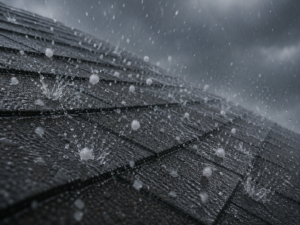
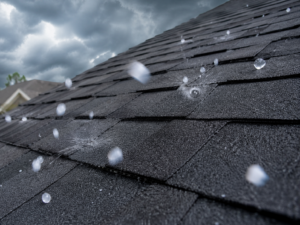
Hail. Colorado ranks second in the nation for hail damage. The Front Range corridor — which includes Denver, Aurora, Lakewood, and surrounding communities — sits squarely in what meteorologists call “Hail Alley.” A single severe hailstorm can cause tens of thousands of dollars in damage to your roof, siding, gutters, and windows. This isn’t a rare event; it’s something Denver homeowners plan for every spring and summer.
Expansive soils. Denver sits on bentonite clay soils that expand dramatically when wet and shrink when dry. This seasonal movement is the primary cause of foundation cracking and settling in Colorado homes, a repair that can range from a few thousand dollars to well over $20,000 depending on severity.
Extreme temperature swings. Denver can experience 70°F temperature swings within a single day. This thermal cycling stresses roofing materials, caulking, window seals, and exterior paint at a much faster rate than in more temperate climates.
Snow and ice. Freeze-thaw cycles can damage gutters, cause ice dams, and accelerate wear on roofing materials. Proper attic ventilation and insulation are critical, and often overlooked, components of Denver home maintenance.
UV exposure. At 5,280 feet, Denver receives significantly more intense ultraviolet radiation than lower-elevation cities. This accelerates the degradation of roofing shingles, exterior paint, and deck materials.
Given all of these factors, Denver homeowners should seriously consider budgeting at least 1.5–2% of their home’s value annually rather than the national baseline of 1%.
The Roof Insurance Rule Every Colorado Homeowner Must Know
This is the section that every Denver homeowner needs to read carefully — because it can mean the difference between a manageable insurance claim and a financial crisis.
The 10-Year and 15-Year Roof Rules
Insurance companies across Colorado have quietly but significantly changed how they handle older roofs. Many insurers now apply what is commonly called the “10-year rule” or “15-year rule” — and if your roof is approaching either of these thresholds, you need to understand exactly what it means for your coverage.
Here’s how it works: Most homeowners insurance policies offer Replacement Cost Value (RCV) coverage for roofs. With RCV, if a hailstorm damages your roof, your insurance company pays to replace it with a comparable new roof at current prices — regardless of how old your existing roof was.
However, once your roof reaches a certain age — often 10 years, sometimes 15 — many insurers automatically switch your roof coverage to Actual Cash Value (ACV). With ACV, your payout is based on the depreciated value of your roof at the time of the claim, not what it costs to replace it.
The financial difference is staggering. Roofing a Denver home currently costs between $9,500 and $24,000 depending on size and materials. Under an ACV policy on an older roof, you could receive as little as $8,000 on a $25,000 claim — leaving you responsible for the remaining $17,000 out of pocket.
What to watch for in your policy:
- Look for the phrases “actual cash value” versus “replacement cost” in your dwelling coverage section
- Check whether your roof is listed separately with different coverage terms than the rest of your home
- Watch for notices buried in your annual renewal documents — insurers are required to give 60 days written notice before non-renewal or coverage changes in Colorado, but these notices can be easy to miss
- Be alert to deductible changes at renewal, which can signal your insurer is reassessing your roof’s risk
The Class 4 Shingle Solution
One of the most financially smart moves a Denver homeowner can make when replacing a roof is upgrading to Class 4 impact-resistant shingles (rated under UL 2218). These shingles are specifically engineered to withstand Colorado’s severe hailstorms and can earn 20–35% premium discounts from many Colorado insurers. The upgrade typically adds $1,000–$3,000 to the cost of a roof replacement, but the annual insurance savings often produce a full return on investment within 2–4 years — while also significantly reducing the risk of a future claim.
New Colorado Legislation That Could Save You Money
If you’re facing a roof replacement or planning a home maintenance upgrade, there is genuinely good news on the legislative front in Colorado right now.
HB25-1302 — The Strengthen Homes Enterprise Act
Colorado’s legislature recently passed HB25-1302, which creates a new state grant program specifically designed to help homeowners upgrade to resilient roof systems. The program has approximately $6.5 million available in fiscal year 2025–26, growing to $13 million annually, and is focused on helping homeowners install hail-resistant and wind-resistant roofing materials.
Homeowners who upgrade to qualifying resilient roof systems may also be exempt from the insurer fee assessed under the program — meaning there’s a direct financial incentive to act sooner rather than later.
SB 155 — Hail-Resistant Roof Grant Program
Senate Bill 155, currently advancing through the Colorado legislature, would assess a small fee on all homeowners’ insurance policies in Colorado and use the revenue to fund additional grants for hail-resistant roof installations. The underlying goal is straightforward: the more Colorado homes with impact-resistant roofs, the fewer claims insurers pay, and the slower insurance premiums rise for everyone.
For the most current information on these programs and eligibility, visit the Colorado Division of Insurance and the Colorado General Assembly.
Your Denver Home Maintenance Checklist
Good home maintenance isn’t just about reacting to problems — it’s about staying ahead of them. Here is a practical maintenance checklist for homes in Denver organized by season:
Spring (Critical Season in Denver)
- Inspect roof for hail or wind damage from winter storms — schedule a professional inspection if needed
- Clean gutters and downspouts after spring storms
- Check exterior caulking around windows, doors, and where siding meets trim
- Inspect foundation for new cracks after winter freeze-thaw cycles
- Service your air conditioning before summer heat arrives
- Check sprinkler system for freeze damage
Summer
- Monitor lawn and landscaping irrigation — overwatering near the foundation accelerates expansive soil movement
- Inspect deck and fence for UV damage and seal or repaint as needed
- Check attic ventilation — Denver’s intense UV and heat can degrade roofing from the inside out if ventilation is inadequate
- Test smoke and carbon monoxide detectors
Fall
- Schedule furnace inspection and replace filters before heating season
- Drain and winterize sprinkler system before the first freeze (typically mid-October in Denver)
- Clean gutters after leaves fall
- Inspect weatherstripping on doors and windows
- Check roof and flashing before snow season
Winter
- Monitor attic for ice dams after heavy snowfall
- Keep a path clear from snow and ice for proper drainage around the foundation
- Check for drafts and address insulation gaps
Home maintenance checklists like this one are most useful when they’re actually used — consider scheduling these tasks on your calendar at the start of each season.
Building Your Home Maintenance Budget
Here is a practical framework for building your annual home maintenance budget as a Denver homeowner:
Start with the 1–2% rule. Take your home’s current value and multiply by 0.015 (1.5%) as a Denver-appropriate starting point. For a $650,000 home, that’s $9,750 per year — or roughly $812 per month set aside in a dedicated savings account. Ultimately, how much should you save each year for maintenance on your home depends heavily on your roof’s age and your insurance coverage type.
Layer in a roof reserve. Given Denver’s hail exposure and the insurance coverage shifts described above, consider building a separate roof reserve. A roof replacement in Denver costs $9,500–$24,000. If your roof is 5 years old and you want to be prepared for a potential replacement in 10–15 years, setting aside an extra $75–$150 per month gives you a meaningful cushion.
Account for your home’s age. The older your home’s major systems like HVAC, water heater, roof, or electrical panel, the more aggressively you should save. A home with a 12-year-old roof, a 15-year-old furnace, and original windows is a fundamentally different financial situation than a 3-year-old new build.
Don’t forget deductibles. Colorado homeowners increasingly face percentage-based hail deductibles rather than flat amounts. On a home insured for $600,000 with a 1% hail deductible, you’re responsible for the first $6,000 of any hail claim. That money needs to be liquid and accessible, not tied up in a long-term investment account.
For a personalized estimate, NOLO’s Home Maintenance Cost Guide is a helpful general resource, and your local real estate agent can give you a more Denver-specific perspective based on the age and condition of your home.
When Maintenance becomes a Real Estate Issue
Here’s something most homeowners don’t think about until it’s too late: deferred maintenance is one of the most common reasons home sales fall apart in Denver.
When a buyer’s inspector finds a roof that’s 14 years old, right at the edge of the 15-year insurance rule, it becomes a negotiating point, a financing hurdle, and sometimes a deal-killer. Buyers who are informed about Colorado’s insurance landscape will factor the cost of a roof replacement into their offer, or walk away entirely. Knowing how much should you save each year for maintenance on your home is only half the equation, the other half is actually doing the work.
The same goes for foundation issues, aging HVAC systems, and outdated electrical panels. These aren’t just maintenance concerns, they’re equity concerns. Consistent, documented home maintenance protects your investment and keeps your home competitive when it’s time to sell.
(Thinking about selling your Denver home? See what buyers are looking for →) (Browse Denver homes for sale →)
Final Thoughts
So, how much should you save each year for maintenance on your home in Denver? At minimum, 1% of your home’s value, but realistically, 1.5–2% is a smarter target given Colorado’s unique climate demands. Layer in a roof reserve, understand your insurance coverage before hail season arrives, and use a seasonal home maintenance checklist to stay ahead of problems rather than chasing them.
Your home is likely your largest financial asset. Treating it that way with consistent, proactive care protects that asset, keeps your insurance intact, and ensures you’re ready for whatever Colorado’s weather throws your way.
Have questions about how a home’s maintenance history affects its value or your buying power in Denver? Contact our team today We’re here to help.
Sources and additional reading: