
The Altitude Will Humble You, But Only at First
Let’s get this one out of the way first because every single person relocating to Denver gets surprised by it, even the ones who think they’re prepared.
Denver sits at exactly 5,280 feet above sea level. That’s a mile up. And while you won’t feel like you’re on a mountain when you’re walking around downtown, your body will absolutely know the difference, especially in the first two to four weeks.
Here’s what to expect: headaches are common in the first few days. Physical exertion, even things as simple as climbing stairs or carrying grocery bags, will feel harder than it should. You’ll get dehydrated faster than you’re used to. And if you push yourself too hard in the gym or on a trail before you’ve acclimated, your body will let you know about it.
The fix is simple: drink more water than you think you need, ease into physical activity during your first few weeks, and give yourself grace. Most people feel fully acclimated within two to four weeks. After that, you’ll forget it was ever an issue and you’ll have a great story to tell when your out-of-town visitors arrive and immediately feel winded walking to dinner.
One more thing worth knowing: the sun is significantly more intense at altitude. Sunscreen is not optional in Denver, even on overcast days, and especially in winter when the sun reflects off snow.
The 300 Days of Sunshine Thing is Actually Real
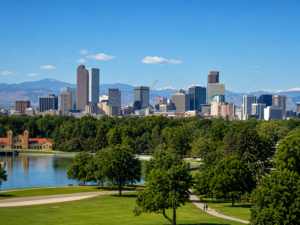
Before relocating to Denver, most people assume the “300 days of sunshine” claim is just marketing. It isn’t.
Denver averages approximately 300 days of sunshine per year, actually exceeding that number in many years, which is more annual sunshine than Miami or Honolulu. The city’s semi-arid climate means that even when it snows, the sun often comes out within hours and melts everything by noon. A full-blown blizzard on a Tuesday can turn into a sunny 55-degree afternoon by Wednesday.
This has a profound effect on daily life in ways that are hard to fully appreciate until you experience it. Outdoor dining extends well into November. People are outside year-round hiking, running, cycling, and sitting in parks in a way that simply doesn’t happen in most other cities. The winter doesn’t feel the way it does in Chicago or Minneapolis because the sun shows up consistently, even when it’s cold.
For people relocating to Denver from cloudy, gray climates like the Pacific Northwest, the Midwest, or the Northeast this single factor is often the biggest quality of life upgrade they experience. It’s hard to be in a bad mood when the sun is shining 300 days a year.
One caveat locals always mention: the dry climate takes adjustment. Denver’s low humidity is wonderful in the summer but wreaks havoc on skin, sinuses, and lips in the winter. Invest in a good humidifier for your bedroom, keep lotion everywhere, and stay hydrated.
Denver is Secretly One of America’s Best Cycling Cities
Here’s something most people don’t know before relocating to Denver: it is one of the best cycling cities in the country, and most newcomers don’t discover this until months after they’ve moved.
Denver has hundreds of miles of dedicated paved cycling paths that keep riders completely off roads and away from cars. The crown jewel is the Cherry Creek Trail, a 42-mile paved trail that follows Cherry Creek from Confluence Park in downtown Denver all the way to Castlewood Canyon near Franktown. Locals use it for commuting, training, and weekend rides.
The South Platte River Trail connects neighborhoods from Chatfield State Park in the south all the way through downtown and north through the city. Combined with neighborhood connectors and the regional trail network, you can genuinely get almost anywhere in Denver on a bike without touching a road.
For finding trails, both urban cycling paths and mountain routes, locals swear by the COTREX app (Colorado Trail Explorer). It’s Colorado-specific, extremely detailed, and great for finding everything from a quick post-work trail ride to a serious weekend adventure in the foothills.
If you’re relocating to Denver and you haven’t biked in years, consider dusting off that bike. You’ll use it more than you expect. (Read our Denver neighborhood guide to find the most walkable and bikeable areas ->)
Red Rocks is Not Just a Concert Venue. It’s a Way of Life
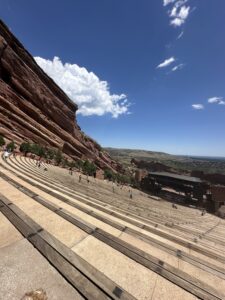
Before moving to colorado denver, most people know Red Rocks as a famous concert venue. After living here for a few months, they understand it’s something much more than that.
Red Rocks Amphitheatre is a naturally formed outdoor venue carved into 300-foot sandstone formations about 15 miles west of Denver. The acoustics are extraordinary, the setting is unlike anything else in the world, and performing there is considered a bucket list milestone for artists. As a Denver resident, having this venue as your local concert spot is genuinely something people never take for granted, even after living here for years.
But Red Rocks isn’t just for concerts. The venue is open to the public every morning for hiking and exercise when shows aren’t scheduled. Locals come out early to run the stairs, do yoga on the stage, and watch the sunrise over the Denver skyline from the top of the amphitheatre. It’s one of those only-in-Denver experiences that becomes part of your regular routine in a way you never anticipated.
Pro tip from locals: the Film on the Rocks series screens classic movies at Red Rocks on summer evenings. Bring a blanket, arrive early for a good seat, and enjoy a movie under the Colorado stars in one of the world’s most beautiful settings. It’s one of the best things about living here that tourists rarely get to experience.
The National Western Stock Show Will Surprise You
Every January, something happens in Denver that stops newcomers completely in their tracks: longhorn cattle walk down 17th Street through downtown.
The National Western Stock Show is one of Denver’s oldest and most beloved traditions, a multi-week celebration of agriculture, rodeo, and Western culture that transforms the city every January. It kicks off with a parade through downtown where ranchers drive their longhorn cattle along 17th Street from Union Station through the heart of the city.
If you’re relocating to Denver from a major coastal city, nothing will remind you more quickly that Colorado is genuinely Western, not just geographically but culturally, than watching longhorn cattle stroll past office buildings and coffee shops while office workers watch from the sidewalk.
The Stock Show itself features world-class rodeo competitions, livestock shows, Western art, food, and one of the best people-watching experiences in the city. It’s a reminder that beneath Denver’s tech-forward, outdoor-lifestyle-obsessed surface, there is a deep and genuine ranching and agricultural heritage that locals are proud of.
Put it on your calendar for your first January in Denver. You won’t regret it.
Skip the Restaurants, Find the Food Trucks
Here’s a piece of honest local advice that guidebooks won’t tell you: Denver’s food truck scene is genuinely exceptional, and it often outshines the sit-down restaurant scene in terms of creativity, value, and authenticity.
Denver has embraced food truck culture wholeheartedly. The variety is remarkable from Korean-Mexican fusion to wood-fired pizza to Colorado green chile to specialty grilled cheese and the quality is consistently high because food truck operators live and die by word of mouth and repeat customers.
The best way to find them is through the Denver Food Truck Association and local neighborhood social media groups, which track where trucks are setting up on any given day. Many neighborhoods have regular food truck nights where multiple trucks gather in parks or parking lots, creating an informal outdoor dining experience that is distinctly Denver.
Farmers markets are also a great source. The Cherry Creek Fresh Market and the South Pearl Street Farmers Market both feature rotating food vendors alongside produce, and locals treat Saturday market visits as a weekly ritual rather than an occasional outing.
When relocating to denver colorado, manage your restaurant expectations. Denver is getting better but hasn’t yet reached the culinary heights of cities like Chicago, San Francisco, or New York. What it lacks in white-tablecloth dining it more than makes up for in casual, creative, community-driven food culture. Lean into it.
You’re Moving to Silicon Mountain
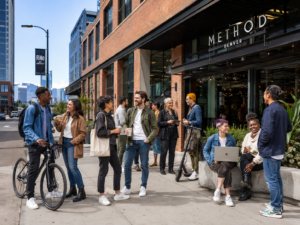
One of the most underappreciated facts about relocating to Denver is what it means professionally, especially for anyone working in technology, aerospace, energy, or healthcare.
The corridor between Denver and Boulder has earned the nickname “Silicon Mountain” and for good reason. The region is home to a booming concentration of tech startups, established software companies, biotech firms, and aerospace giants. Colorado ranks second only to California in aerospace employment, with major players like Lockheed Martin and Ball Aerospace anchoring a sector that employs tens of thousands of Front Range residents.
The renewable energy sector is growing rapidly, with Denver serving as a headquarters hub for wind and solar innovation. Healthcare is another major industry, anchored by UCHealth, Children’s Hospital Colorado, and National Jewish Health, consistently ranked among the best specialty hospitals in the country.
Denver’s unemployment rate consistently tracks below the national average, and with an income per capita significantly higher than the national norm, the professional opportunity here is real and growing. For people relocating to Denver from high cost-of-living coastal cities, the combination of strong salaries and relatively lower costs can represent a genuine quality of life upgrade.
If you’re making a career move as part of your relocation, Denver’s job market deserves serious research. There may be more opportunity here than you realize. (Read our Moving to Denver guide for a deeper look at the job market ->)
Denver is Safer Than You’ve Heard
If safety concerns have crossed your mind while considering relocating to Denver, you’re not alone. The news hasn’t always painted a flattering picture. But the current data tells a genuinely encouraging story.
Heading into 2026, Denver saw a dramatic 48% drop in homicide rates, one of the largest decreases of any major U.S. city. The city has made significant public safety investments, and the results are showing up in the numbers. As of January 2026, Denver’s efforts on homelessness have led to what city officials described as the largest multi-year reduction in unsheltered homelessness in U.S. history.
That said, locals are honest: like any major city, Denver has neighborhoods that require more awareness than others, and auto theft remains an issue worth taking seriously. Always lock your car. The vast majority of Denver’s most popular residential neighborhoods are safe, community-oriented, and actively maintained by engaged residents.
The honest local advice: do your neighborhood research before you buy or rent, visit at different times of day, and talk to people who actually live there. Our neighborhood guide covers the personality and character of Denver’s most popular areas in detail. (Read our Denver neighborhood guide ->)
Denver is a “Do Stuff” City, and That’s a Feature, Not a Bug
This one is harder to quantify but important to understand before relocating to Denver colorado: Denver has a distinct culture around activity and movement that permeates daily life in a way that’s different from most American cities.
People here bike to work, run before their morning meetings, hike after work, and treat weekend outdoor adventures as non-negotiable parts of their schedule rather than occasional treats. It’s a city where the question “what are you doing this weekend?” almost always involves going somewhere outdoors.
This is genuinely wonderful for most people and it’s one of the primary reasons people choose Denver. It’s worth knowing about before you arrive so you can lean into it rather than feel left behind. If you’ve been meaning to get more active, moving to colorado denver will be the most effective motivator you’ve ever had. The culture makes it easy.
Every neighborhood is close to a decent running trail, cycling path, or major outdoor space. City Park, Cheesman Park, Sloan’s Lake Park, Washington Park– these aren’t just green spaces on a map. They’re living community hubs where people gather, exercise, socialize, and decompress every single day.
Denver is a city that rewards people who show up ready to do things. If that’s you, you’re going to love it here.
The Mountains Are Closer Than You Think
Save this one for when your out-of-town guests arrive and ask what you want to do on Saturday morning: you can be skiing world-class terrain within 90 minutes of downtown Denver.
Breckenridge, Keystone, Arapahoe Basin, Loveland, Eldora — multiple world-class ski resorts are accessible as a day trip from Denver without the need for a hotel or an elaborate plan. You can leave downtown at 7am, ski all day, and be back for dinner.
Skiing is just the beginning. The broader mountain lifestyle that opens up when relocating to Denver includes:
- Hot springs — multiple natural and developed hot springs within 2-3 hours, perfect for a weekend reset
- Rocky Mountain National Park — about 90 minutes from downtown, one of the most visited national parks in the country
- White water rafting — Clear Creek Canyon near Golden is practically in Denver’s backyard
- River surfing — a growing trend along the Front Range as engineered whitewater parks create surfable standing waves
- Mountain towns — Breckenridge, Estes Park, Steamboat Springs, Telluride– each worth a weekend visit in any season
Locals develop a rhythm with the mountains that becomes one of the most cherished parts of living here. A Friday afternoon drive up to a mountain town, a Saturday on the slopes or trails, back home Sunday. It becomes a lifestyle rather than a vacation.
When you’re ready to find a home that puts you in the best position to enjoy all of this, location relative to the mountains matters. Some Denver neighborhoods and suburbs get you to I-70 and into the mountains significantly faster than others — something worth factoring into your home search. ( Ready to start your search? Contact our Denver relocation team ->)
One Last Thing
Relocating to Denver is a genuinely exciting decision, and the people who move here consistently say it’s one of the best choices they’ve ever made. The sunshine, the mountains, the outdoor culture, the professional opportunity, and the genuine sense of community make it a city that gets under your skin quickly.
But like any move, going in informed makes all the difference. The altitude, the dry climate, the food truck scene, the January cattle parade? These are the things locals wish someone had told them before they arrived.
At Legacy 100 Real Estate Partners, we’ve been helping people relocate to Denver and Colorado’s Front Range for over 40 years. We know this city, its neighborhoods, and its quirks inside and out. We’d love to help you find the right home for your next chapter here.
Schedule a free relocation consultation with our team today ->
Sources and additional reading: