
Why Your Neighbor’s House Sold for More
It is one of the most frustrating experiences in real estate. Your neighbor listed their home around the same time you did. Similar size. Similar street. Similar neighborhood. And somehow their house sold in two weeks for over asking price while yours has been sitting for six weeks with three showings and no offers.
What happened?
We have this conversation with sellers more than you might expect, and we are going to give you the same answers we give them. It almost never comes down to luck. It almost never comes down to the market. And it almost never comes down to something you could not have controlled.
Here is what actually made the difference.
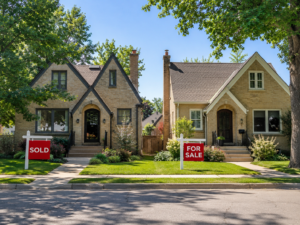
They Priced It Correctly From Day One
Pricing it correctly is likely the reason why your neighbor’s house sold for more. By a significant margin.
In the current Denver market, homes that are priced accurately based on current comparable sales are selling in two to three weeks. Homes that are priced above market, with ideas anchored to what a neighbor got in 2022, or to what the seller needs to net, or to what feels right, are sitting for sixty to ninety days and eventually selling for less than a correct initial price would have achieved.
Your neighbor’s broker probably showed them three to five comparable sales from the past three to six months, adjusted for condition and features, and priced the home to reflect what buyers in this market are actually paying. Not what the market was paying at the peak. Not what the Zestimate says. What real buyers with real financing are writing checks for right now.
If your home was priced above that number, even by a modest amount, buyers noticed. They do their research. They know what things are worth. And an overpriced home does not generate showing traffic, it generates scroll-past traffic.
The painful math of overpricing is that sellers who start too high and chase the market down almost always net less than sellers who price correctly from the start. The first two weeks of a listing generate the most buyer interest. When that window closes without an offer, the home starts to feel stale, and the price reductions that follow send a signal buyers do not love.
Their Home Was Ready to Show Before the First Buyer Walked Through
The Denver market in 2026 rewards move-in ready homes and is increasingly unforgiving of homes that need work. Buyers have more options than they have had in years and they are using those options to be selective.
Your neighbor’s broker probably walked through the home before listing and gave them a specific list of what needed to happen. Fresh paint in neutral colors. Carpet cleaned or replaced. Light fixtures updated. The deferred maintenance items addressed. Landscaping tidied. And the home decluttered and depersonalized so buyers could see the space rather than the seller’s life in it.
None of those things are glamorous. None of them require a major renovation. But collectively they are the difference between a home that reads as ready and a home that reads as work. And buyers in this market are choosing ready every time they can.
If your broker walked through before your listing and gave you a punch list and you did some of it but not all of it, the items you skipped are probably the ones buyers noticed.

Their Photos Were Better Than Yours
Buyers decide within the first few seconds of looking at a listing online whether they want to book a showing. That decision is made almost entirely based on photography.
Professional real estate photography is not optional in this market. It is the difference between a listing that generates ten showing requests in the first week and one that generates two. Wide angle lenses, proper lighting, decluttered spaces, exterior shots on a blue sky day- these things matter in ways that are difficult to overstate when your entire first impression is delivered through a screen.
If your photos were taken on a phone, or on an overcast day, or with furniture and clutter still in frame, buyers made a decision about your home before they ever considered scheduling a visit. That is a problem that starts before the first showing and cannot be fixed after the listing goes live without taking the home off the market and relaunching.
They Fixed the Things Their Broker Told Them to Fix
This one is uncomfortable to say and we are going to say it anyway because it is true.
The sellers who get the best outcomes are almost always the ones who listen to their broker’s pre-listing advice and act on it, even when the advice is inconvenient, expensive, or involves hearing something they did not want to hear about their home.
The sellers who struggle are often the ones who heard the same advice and decided their situation was different. The broker said repaint the living room and they decided the burgundy accent wall was fine. The broker said get the carpet cleaned and they decided buyers could look past it. The broker said the price needed to come down five percent and they listed ten percent higher because they had a number in their head.
Every one of those decisions is understandable. None of them serve the seller.
At Legacy 100, we walk through every listing before it goes on the market and we have the conversation that needs to be had. We tell you what the carpet situation is costing you. We tell you what the price needs to be based on what buyers are actually paying. We tell you which repairs matter to buyers and which ones do not. And we tell you before you list, not after six weeks of disappointing showing feedback.
The sellers who hear that conversation and act on it are almost always the ones who end up on the right side of a result like your neighbor’s.
Their Broker Understood This Market at the Neighborhood Level
Not all Denver real estate is the same. Not even close.
What is happening in Wash Park is not what is happening in Lakewood. What is happening at the $500,000 price point is not what is happening at $800,000. And what worked eighteen months ago is not necessarily what works today in a market that has shifted meaningfully toward buyers having more time, more options, and more negotiating leverage.
Your neighbor’s broker probably knew specifically how homes like theirs were performing in that specific neighborhood at that specific price point in the current month. They knew how many competing listings were active. They knew which features buyers in that market were prioritizing. And they used that knowledge to price, prepare, and market the home in a way that was tuned to the actual buyer pool, not to a general sense of what real estate looks like.
Forty years of selling in this specific market gives Legacy 100 that kind of knowledge. Not just about Denver broadly, but about the streets and neighborhoods and price points where we have been working for decades.

Their Timing Was Better, But Not in the Way You Think
Sellers often attribute a neighbor’s success to lucky timing and leave it there. Sometimes timing is genuinely a factor. But more often, what looks like lucky timing is actually smart timing, a decision made with intention rather than by accident.
Spring remains the strongest selling season in Denver. Listing in March or April rather than December or January is not luck. It is strategy. And within any given season, listing on a Thursday so your home is fresh for weekend showings, rather than on a Tuesday when buyer attention is lower, is a detail that experienced brokers think about and less experienced ones do not.
That said, timing alone cannot save an overpriced, underprepared home. And a correctly priced, well-prepared home will sell in any month of the year. Timing is a multiplier, not a miracle.
What Smart Sellers Do Before They List Again
If your home did not sell the way you had hoped, or if you are reading this before your first listing and want to make sure you are on the right side of this conversation, here is what makes the difference.
Choose a broker who will tell you the truth before you list, not after. The broker who validates your price without questioning it is not serving you. The broker who walks through your home, identifies what needs to happen, and gives you honest comparable sales to anchor your price is the one working in your interest.
Act on the advice you are given, even when it is inconvenient. The punch list items, the price conversation, the staging recommendations- these are not suggestions. They are the difference between your home and your neighbor’s.
Your broker should invest in professional photography. It is one of the highest-return expenditures in the listing process and one of the most commonly skipped.
And price based on what the market is doing right now, not on what you need, not on what it was worth in 2022, and not on what the algorithm says. Current comparable sales, reviewed honestly with a broker who knows this market, are the only factor that matters.
For more on what selling looks like in the current Denver market, our seller FAQ, our post on why your house might not be selling, and our home staging post cover the full picture.
Our experience. Your legacy.
Contact Legacy 100 Real Estate Partners — we will tell you what you need to hear before you list.
Related reading:
- Why My House Is Not Selling: 8 Honest Reasons and How to Fix Them
- Home Staging Denver: Is Your Home Having an Identity Crisis?
- Does Your House Smell? Polite Brokers Won’t Say It. But It Will Cost You.
- Selling a Home in Denver in 2026: The Questions Every Seller Is Actually Asking
- Who Should I Hire to Sell My House in Denver?
External DoFollow links:
- REcolorado Denver Metro Market Watch: https://recolorado.com/july-2026-housing-market-reports/
- National Association of Independent Brokers — home pricing resources: https://www.nareb.com